Pharmacy in 2035: Key Takeaways from Becker’s CPO Summit


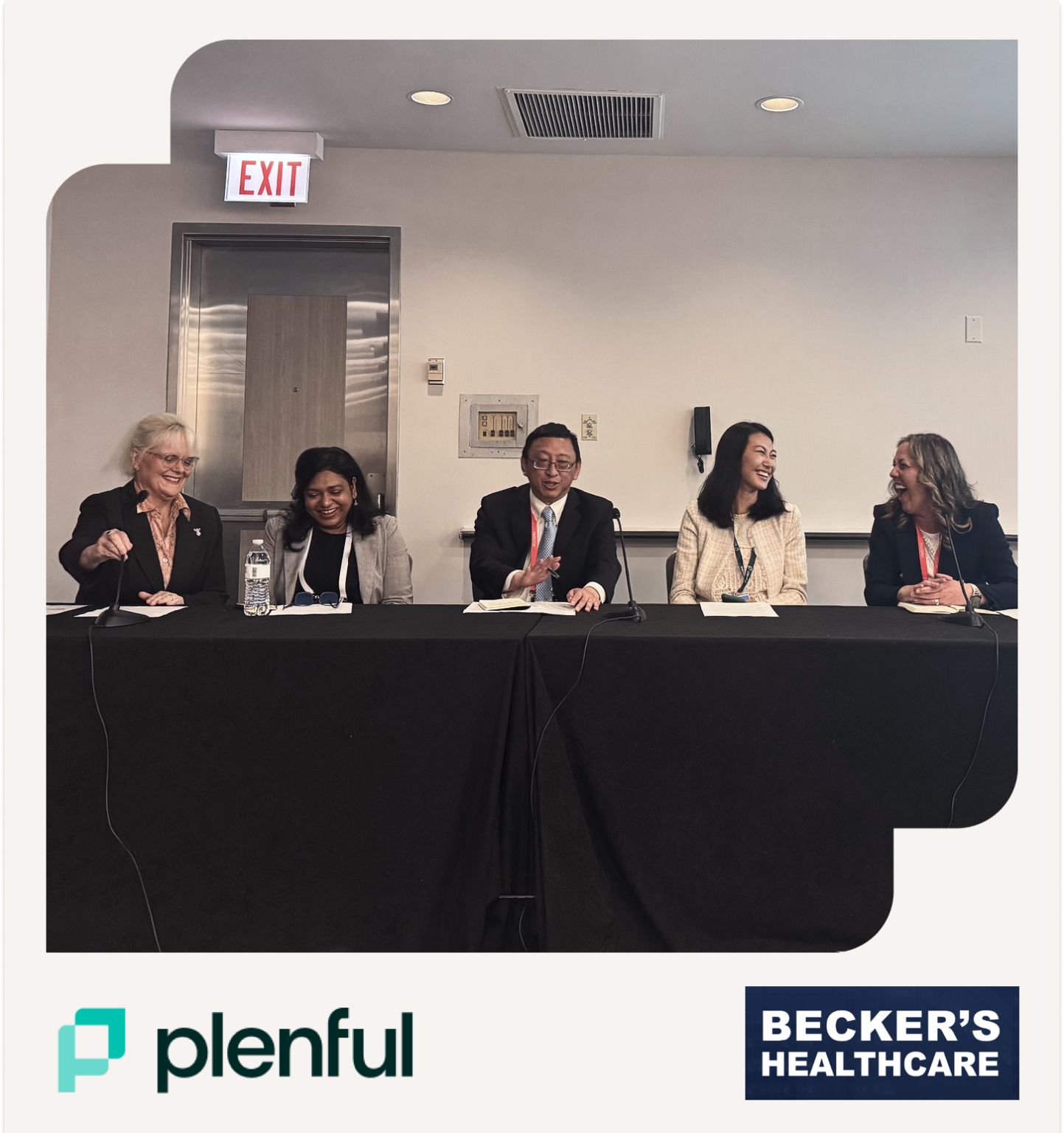
At this year’s Becker’s Spring Chief Pharmacy Officer Summit, the panel “Pharmacy in 2035: Ideas to Implement Today to Answer Tomorrow’s Challenges" gathered leaders from Cone Health, Baylor Scott & White Health, Community Health Systems, Ochsner Health and our own Founder & CEO, Joy Liu.
We’ve recapped the three most popular topics that resonated with the hundreds of pharmacy leaders in the room.
1) How do we move beyond manual, fragmented workflows?
Pharmacy teams are managing growing complexity across prior auth, infusion and 340B, but the real challenge isn’t just volume, it’s fragmentation. Leaders are shifting away from point solutions toward the adoption of centralized platforms that unify workflows, data, and teams.
As Joy shared:
“There are hundreds of manual administrative workflows across pharmacy today, and AI technology allows us to develop the highest value solutions alongside our health system partners. Together, we’re reimagining how teams spend their time holistically - not as point solutions, but as one platform that can grow and scale alongside their teams.”
The theme was consistent: scale doesn’t come from adding tools, it requires rethinking the entire infrastructure more holistically.
2) What role will AI actually play in pharmacy operations?
AI is already delivering measurable impact, from cutting prior authorization time dramatically to improving team productivity and patient engagement. But the bigger shift is not just efficiency, it’s how roles are evolving.
AI is enabling pharmacy teams to operate at the top of their license, reducing administrative burden and shifting focus toward clinical decision-making.
Kristin Kraszewski, Chief Pharmacy Officer at Cone Health, put it simply:
“There is not enough workforce to meet the needs we have today—let alone what we’ll need in 2035. We must make the move to AI.”
The key takeaway: adopting AI is no longer an option, it’s a critical technology lever to supplement our existing labor shortage.
3) What needs to change to make pharmacy a core clinical and financial driver?
Looking ahead, pharmacy is becoming more deeply embedded in care delivery and financial strategy. Leaders are redesigning models to align pharmacy goals directly to clinical, operational, and financial outcomes.
This includes:
- Embedding pharmacists into care teams
- Aligning with value-based care models
- Taking ownership of pharmacy’s financial performance
Pharmacy must lead, not follow, both clinical and financial transformation. If there’s one thing leaders agreed on, it’s this: the future of pharmacy will not happen passively, it will need to be built proactively and with intention. The organizations that succeed in 2035 will be the ones acting now, restructuring workflows, investing in scalable technology, and redefining the role of pharmacy at the center of care.
Let’s streamline your pharmacy workflow
If your organization is exploring AI and workflow automation solutions, let’s connect. Plenful powers a growing number of high-value workflows, from 340B compliance auditing, to missed opportunity identification, intake and prior authorization, to reconciliation management via MFP Intelligence. Explore our full suite of solutions here.
📅 Request a personalized demo to see how we can help your team reduce manual work, support your compliance posture, and unlock revenue.

.png)


.png)