Intake is Where the Patient Journey Comes Together
This piece is written by Dustin Eubanks, SVP of Strategic Partnerships @ Plenful.
During an on-site visit before a Plenful implementation, we watched a pharmacy technician work through a shared inbox, moving PDFs into folders and comparing referral documents. Some files were nearly identical. Others had a few additional pages attached at the end.
The technician spent nearly an hour searching for a single lab value.
That detail has stayed with our team because that hour captures how much work hides inside a task that sounds simple: receiving a referral. Before anyone could use the information to move the patient forward, someone had to find it, understand it, and connect it to the right case.
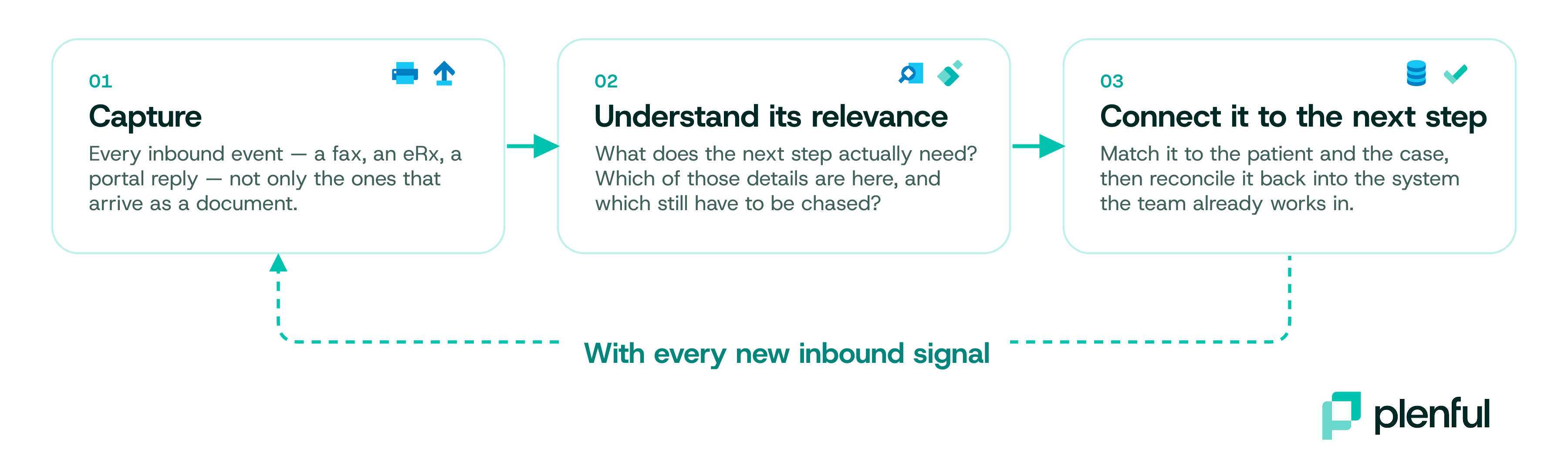
At Plenful, we think of intake as the ongoing work of capturing incoming information, understanding its relevance, and connecting it to the next step in a patient’s journey. That definition changes what we build and what healthcare organizations should expect from their workflows.
Start with what needs to happen next
The purpose of intake becomes clearer when we ask what the information is for and how it will be used later to navigate the care journey.
A referral packet might contain an order, a diagnosis, clinical notes, and laboratory results. Extracting gives you data. Benefit investigation and prior authorization need judgement: which details matter for the task ahead, whether they are present, and what still has to be chased.
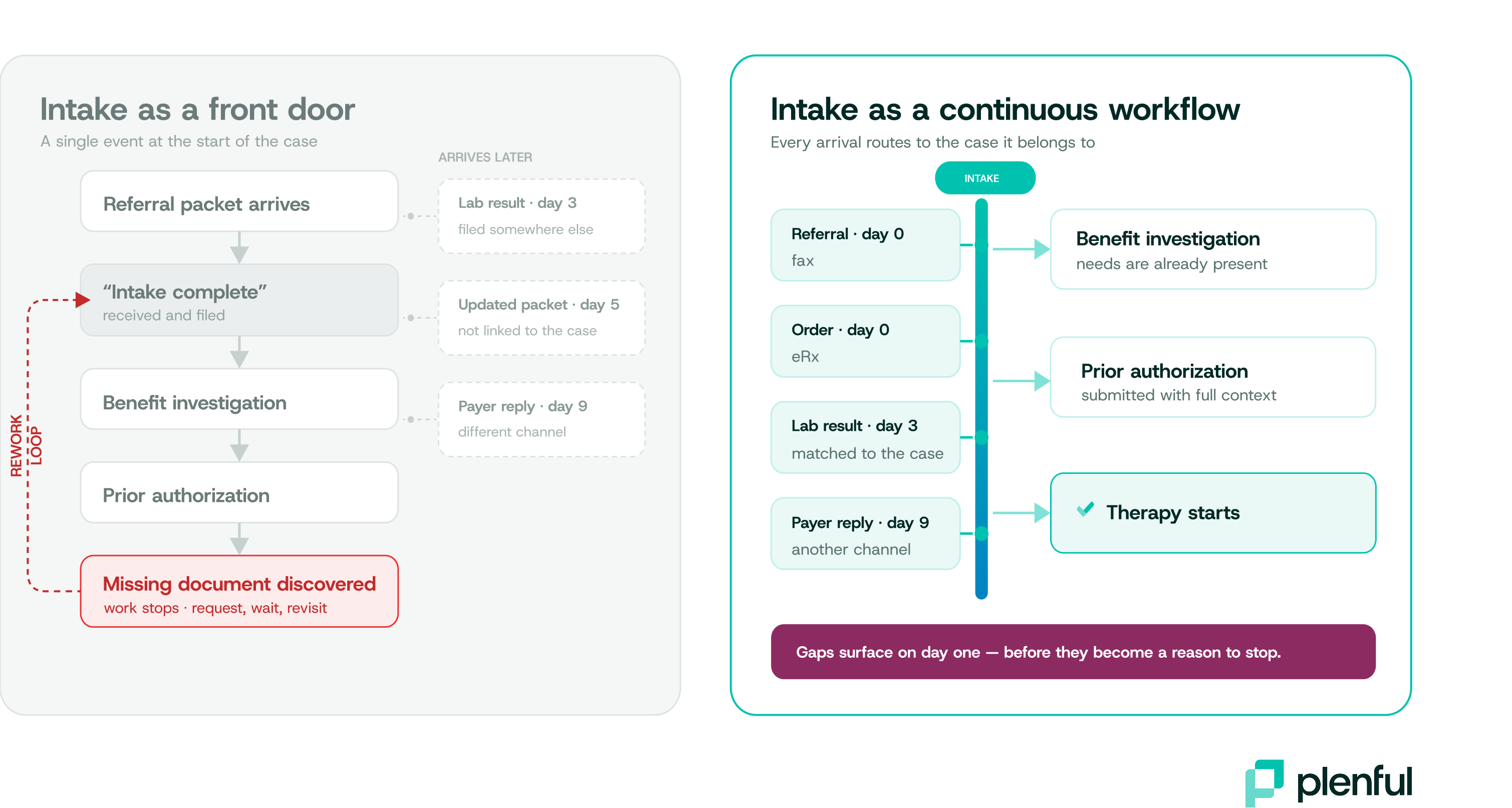
Consider a specialty pharmacy referral. The order arrives with clinical notes, but a supporting document needed for the next step is missing. A workflow that treats receipt of the packet as completed intake can pass that gap downstream. Another team member then has to discover it, request the document, and revisit the case when it arrives.
Intake built around downstream needs surfaces that gap on day one. The team can begin gathering the missing information before it becomes a reason to stop work later.
Intake has to account for more than faxes
Much of the conversation about intake starts with faxes. They are a visible source of manual work, and intelligent document processing can make their contents easier to use. But a fax-only definition leaves out information that arrives at handoffs - the information most needed to build full context on a patient.
An electronic order is still an intake event. So is a new document that adds context to an existing referral. Each requires the organization to determine what arrived, which patient and workflow it belongs to, and what should happen because of it.
Consider when a specialty medication referral arrives by eRx but the supportive documentation or follow up information comes via fax. Alternatively, your team may get some orders or data data via electronically and others via fax. The formats differ, but the care team needs to have a universal workflow for all inbound information. Processing each item in isolation leaves people responsible for making those connections themselves.
Intake is the broader workflow that receives and organizes information, whether it comes through a document or a structured electronic connection. An electronic order may not need document processing at all, but it still needs to reach the right workflow with the right context.
Intake continues as the case evolves
The initial referral rarely contains everything the case will need.
A requested lab result may arrive later. An updated packet may contain additional pages. A payer response may come back through a different channel from the original submission. Each arrival creates another intake task.
A person has to decide whether it belongs to an existing case, whether it adds anything new, and whether it changes the next action. Without that connection, a received document can remain functionally missing: it exists somewhere in the organization, but the person who needs it cannot readily use it.
Treating intake as an ongoing responsibility makes those later arrivals part of the same workflow. A request for missing information remains connected to the case. When the response arrives, it can be matched back and made available for the next step.
For the team, the value is practical. Less time spent reconstructing the history of a case. Fewer repeated searches through packets. A clearer view of what is available and what still needs attention.
Automation that stops short of your system of record is just another handoff
Capturing and interpreting information only helps if the people responsible for the next step can use it.
Healthcare organizations should ask how an intake workflow connects to their existing systems: what comes in, how it is matched to a patient or case, and what information is returned to the system the team relies on. Those answers determine whether automation removes work or leaves another handoff for staff to manage.
This is also where the meaning of a completed intake step becomes concrete. The relevant information has been organized, outstanding needs are visible, and the appropriate updates are available in the connected workflow. The next person can continue without piecing the case together again.
See how Plenful connects intake to the work that moves your patients forward
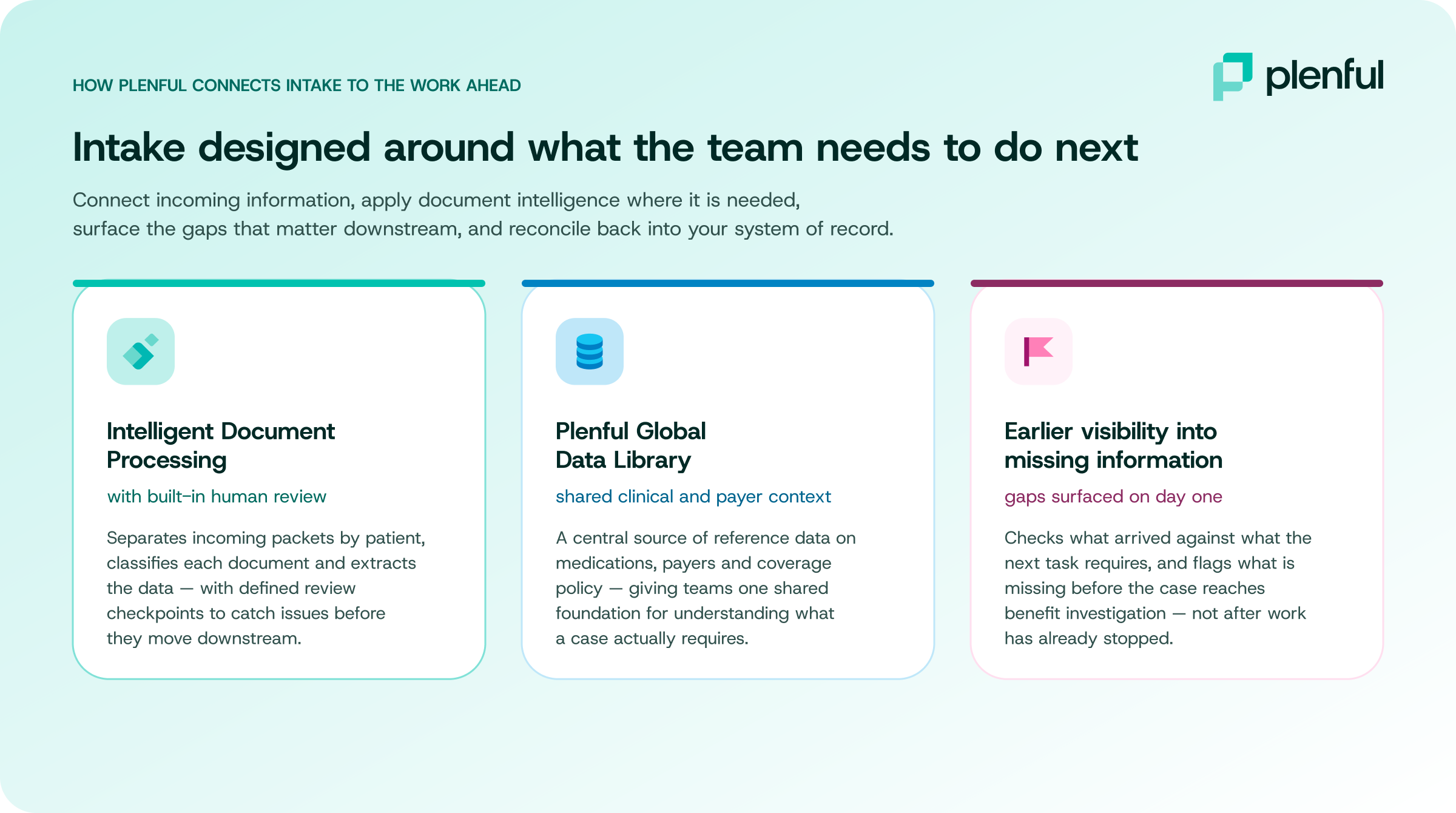
At Plenful, we design intake around what the team needs to do next: connect incoming data, apply document intelligence where it is needed, identify information gaps relevant to downstream tasks, and reconcile information back into connected systems. Request a demo to see our Intake Authorization suite in action.